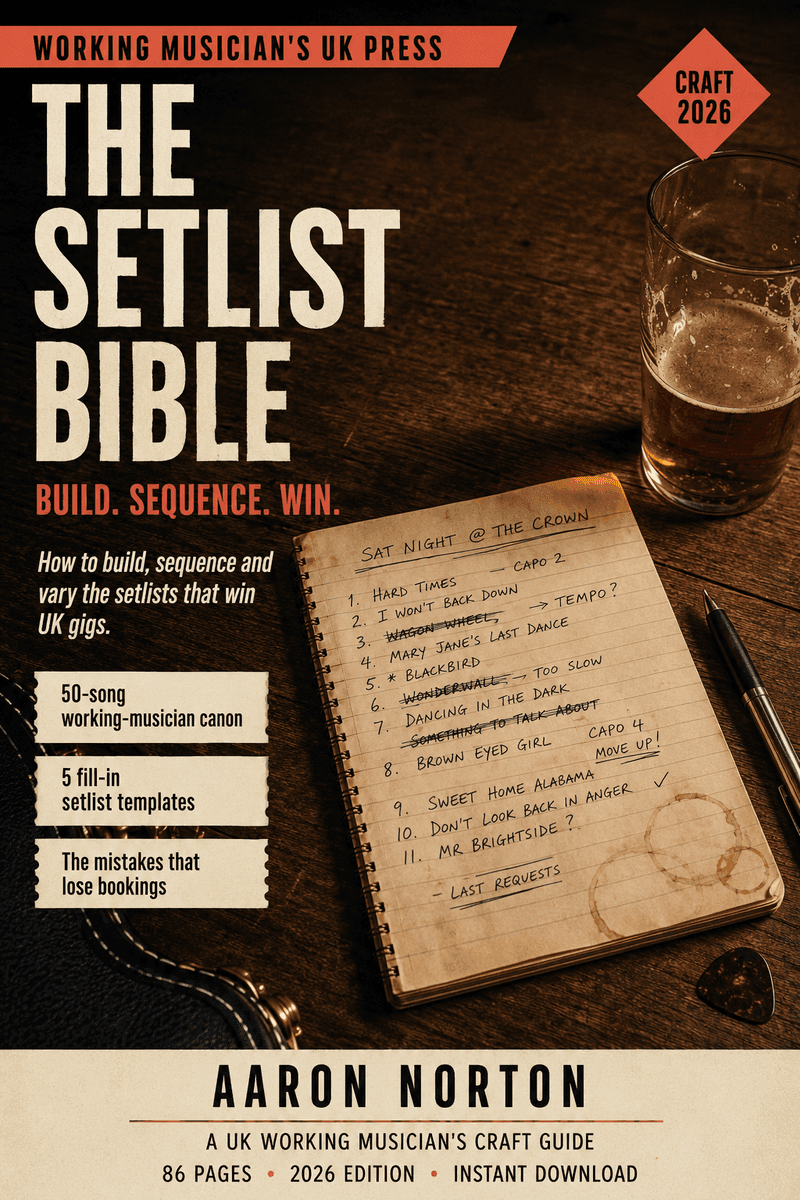
Free · The gigging craft · one page
The Setlist Bible Cheat-Sheet
The shape of a set that reads the room and carries it — warm, lift, peak, land, close — with what to open on, what to close on, and how many songs fill a 45 or 60-minute slot. On a single page.
The same songs that killed on Friday can die on Saturday. The room changed and the setlist didn't move with it. This is the page that fixes that. Pop your email in and it's yours, plus a copy lands in your inbox.
Free download
Where shall I send it?
Enter your email and the cheat-sheet is yours instantly — no charge. You'll also join The Independent Musician's Library, my notes on the craft of making a living from music. Unsubscribe any time.
The sheet is the shape. The book is the system.
The cheat-sheet gives you the five-act arc and the working numbers. The Setlist Bibleis the twenty years behind it — the venue-by-venue running-order grammar, the vocal-pacing map so your voice lasts the whole gig and the whole week, the request-reserve method for songs you weren't expecting, the setlist crimes that quietly lose you bookings, and a printable blank setlist sheet.
Built from pubs, weddings, function gigs, corporates and parties, for anyone who turns up with a guitar and has to carry the room on their own.
Setlist questions, answered
How many songs are in a 45 or 60-minute acoustic set?
A 60-minute set is roughly fifteen songs, a touch fewer if you talk between them. A 45-minute set is around twelve to thirteen. My standard pub booking is two 60-minute sets with a break, which is about two hours of singing across the night. Build your craft around the one-hour set; it's the best unit there is.
What song should I open a gig with?
Not your best song. Open with a familiar, mid-tempo song everyone knows, something that settles the room and starts the climb. Save the big sing-alongs for the peak of the set, when the room is ready for them. The one exception is a festival or support slot, where there's no warm-up and song one has to land like song eight of a pub set.
What should I close a set with?
A song with a definite ending. A closer that fades out on a held note gets a polite clap and a turn to the bar; a clean stop lets you say thank you with the room still warm. And the last song before a break should leave them wanting more, so it shouldn't be your biggest song either, or the second half has nowhere left to climb.
What's the difference between a song list and a setlist?
Your list is every song you can play cold; it's a library, not a plan. Your setlist is a filtered version of that list, shaped for the room in front of you and allowed to change on the night. I turn up with at least double the songs I need so I can pull the night either way depending on what the room gives me.
Should I plan the keys of my setlist so the songs flow?
In my experience, no. I've gigged for twenty years and never once thought about the key of one song relative to the next, and neither does the audience. What a room responds to is the energy you put in and whether they know the song. Spend that planning time on the energy curve and the decade spread instead.
What are the best songs for a solo acoustic pub gig?
Familiarity beats everything. The songs people already know the words to, spread across the eras so every age in the room hears something from their own years, and never two of the same flavour back to back. My full working list of fifty is in the blog post '50 acoustic cover songs that actually work in a UK pub', and the cheat-sheet is the shape you build from it.